
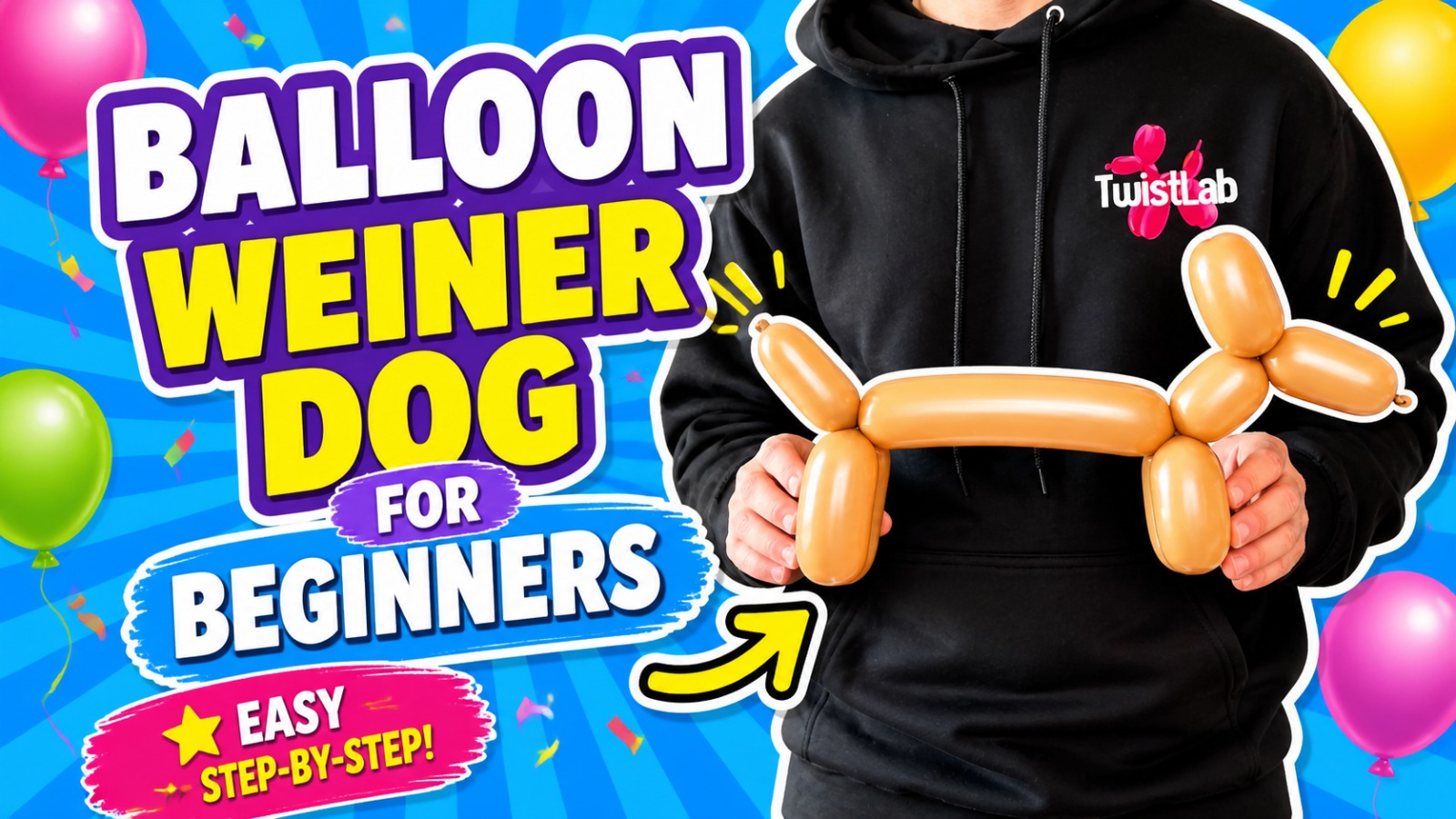
Why Learning How to Make a Balloon Dog Is the Best Starting Point
If you want to learn balloon twisting, the balloon dog is the single most important figure to master first. It uses the exact same foundational twist — the basic twist and the lock twist — that appear in nearly every other balloon animal you'll ever create. Once you understand how to make a balloon dog, every other figure becomes dramatically easier.
In this guide we'll walk through the entire process from inflating the balloon to tying off the final ear. You don't need any experience, and the whole thing takes under ten minutes once you've done it a few times.
What You Need
- One 260Q balloon — the long, skinny kind used for balloon twisting. Brands like Qualatex and Betallatex are easiest for beginners.
- A balloon pump — inflate by mouth if you must, but a hand pump saves your lungs and gives more consistent pressure.
That's genuinely it. No scissors, no tape, no special tools. The balloon dog is a pure twisting figure.
Step 1: Inflate the Balloon (Leave a Tail)
Inflate your 260Q balloon leaving about 3–4 inches (8–10 cm) of uninflated rubber at the end. This "tail" is critical — as you twist, air moves toward the end of the balloon. Without a tail, the balloon will pop. Tie a knot at the inflated end.
Step 2: Make the Nose
Starting at the knotted end, pinch and twist a small bubble about 1 inch (2.5 cm) long. Hold the knot between your fingers so it doesn't unravel. This is the dog's snout.
Step 3: Make Two Ear Bubbles and Lock-Twist Them
Directly after the nose bubble, twist two more bubbles of equal size — roughly 2 inches (5 cm) each. These will become the ears. Once you have both ear bubbles, pinch them together and rotate them around each other twice in the same direction (this is the lock twist). Now release — they stay in place on their own. That's the magic of the lock twist, and you'll use it for every set of ears, legs, and wings in balloon art.
Step 4: Neck Bubble
After the ears, pinch off one more bubble roughly 2 inches long. This is the neck. Don't lock it yet — just hold it with your fingers.
Step 5: Front Legs
Make two equal bubbles of about 3 inches (7–8 cm) each after the neck. These are the front legs. Lock-twist them together just like you did with the ears. The neck bubble should now sit naturally between the ears and front legs.
Step 6: Body
After the front legs, twist off a single longer bubble — about 3 inches again — for the body.
Step 7: Back Legs and Tail
Make two more equal bubbles the same size as the front legs. Lock-twist them. Whatever remains after the lock twist is the tail — it should stick up naturally.
Step 8: Shape the Dog
Gently bend the ears forward and curve the tail upward. Adjust the neck so the head points forward. You now have a complete balloon dog.
Common Beginner Mistakes
- Forgetting the tail — always leave uninflated rubber or the balloon will burst on the final twist.
- Uneven bubbles — ear, leg, and body bubbles should match in size or the figure looks lopsided. Practice consistency before speed.
- Not holding previous bubbles — until a bubble is lock-twisted, it will unwind. Use your non-dominant hand to hold previous segments.
What to Learn After the Balloon Dog
Once the balloon dog feels natural, the most logical next steps are the balloon sword, the balloon flower, and the balloon hat. Each one introduces one new technique while reusing what you already know from the dog.
If you want a structured path from complete beginner to booking your first paid events, our full course at TwistLab covers all of these figures in order — with real-time video guidance, technique breakdowns, and the exact pacing that helps people go from zero to confident in weeks rather than months.
Frequently Asked Questions
What size balloon do I use to make a balloon dog?
Use a 260Q balloon. The "260" means it inflates to approximately 2 inches wide and 60 inches long. This is the industry-standard size for all balloon twisting figures.
How long does it take to learn how to make a balloon dog?
Most people can make a recognisable balloon dog within their first 15–20 minutes of practice. A clean, consistent dog that holds its shape under party conditions typically takes 2–4 hours of total practice time spread across a few days.
Do I need a balloon pump?
Technically no — people do inflate balloons by mouth — but a pump is strongly recommended. Inflating by mouth makes it difficult to maintain consistent pressure, and some people find it painful on their sinuses. A basic double-action hand pump costs under $10 and makes the entire experience easier.
.jpg?alt=media&token=0266b7e8-db04-406a-b722-d4df9fd96f07)
.jpg?alt=media&token=3d41a428-73b7-491b-9044-66aee592ceb5)