.jpg?alt=media&token=f1c12874-b999-43c4-8024-c81a4ec41651)
You Can Make Your First Balloon Animal Today
Most people who want to learn balloon twisting spend weeks talking themselves out of starting. They assume it requires special talent, years of practice before anything looks right, or expensive gear. None of that is true. With one 260Q balloon and a pump, you can produce your first balloon animal in under five minutes — even with zero prior experience.
This guide gives you the fastest possible path to your first finished figure. We'll use the balloon sword, which is the single quickest balloon animal to make and requires only two types of twists: the basic twist and the fold twist.
The Fastest First Balloon Animal: The Balloon Sword
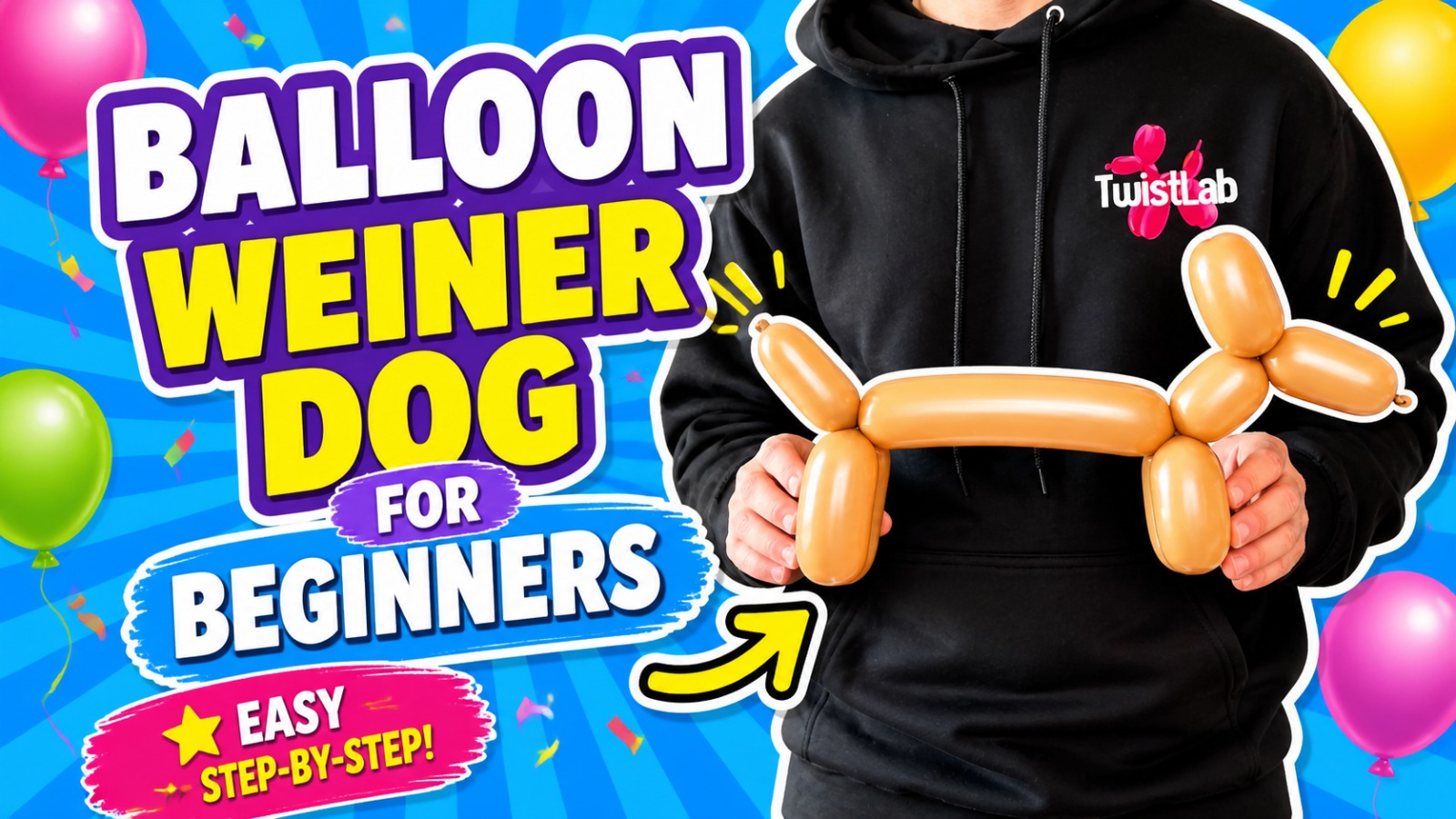
While the balloon dog is the most famous beginner figure, the balloon sword is actually the faster starting point. It requires only three steps and can be made in under 90 seconds. Once you're comfortable with the sword, the balloon dog takes just 10–15 minutes to learn because it uses the same two techniques plus the lock twist.
What You Need
- One 260Q balloon (any colour — red, blue, and gold look most sword-like)
- A hand pump
The 3-Step Balloon Sword
Step 1: Inflate
Inflate your 260Q, leaving 3–4 inches of uninflated tail. Tie a knot at the inflated end.
Step 2: Make the Handle
From the knot end, measure about 10–12 inches and pinch a twist. Fold that 10-inch section back against the rest of the balloon and twist the fold point around twice. You now have a loop — this is the hand guard of the sword. The knot-end section inside the loop becomes the handle grip.
Step 3: Blade Check
Everything remaining after the guard is the blade. Straighten it out. You have a balloon sword. Congratulations — that was your first balloon animal.
The Two Fundamental Balloon Twisting Moves
Every balloon figure, from the simplest sword to a complex dragon, is built from just two techniques:
- The basic twist — pinch a section of balloon and rotate it away from the main body until it holds a kink
- The lock twist — twist two adjacent bubbles around each other so they hold in place without you gripping them
Once these two moves feel natural, you can learn any balloon figure. The difference between a beginner and an experienced twister isn't secret knowledge — it's repetition of these same two techniques in different configurations.
Your Five-Minute Practice Plan
- Minute 1–2: Make the balloon sword as described above. Repeat it twice.
- Minute 3–4: Practice making 5 identical basic twists in a row on a single balloon — just a chain of bubbles. Focus on making each one the same size.
- Minute 5: Attempt your first lock twist. Make two adjacent bubbles and rotate them around each other. If they hold when you release, you've nailed it.
That's your foundation. Everything else builds from here.
What Comes After Your First Balloon Animal?
After the sword, the logical progression is: balloon dog → balloon flower → balloon hat → balloon butterfly → more complex animals. Each step introduces one new technique while reinforcing what you already know.
If you want to go from complete beginner to event-ready professional as quickly as possible, a structured course removes all the guesswork about what to learn and in what order. TwistLab's balloon twisting course is built around exactly this progression — with video walkthroughs, technique breakdowns, and the business skills needed to book and run paid events.
Start the TwistLab Course — Enroll Today →
FAQ
How long does it take to learn balloon twisting?
You can make your first recognisable balloon animal today. A clean, party-ready balloon dog typically takes 2–4 hours of practice. A full repertoire suitable for paid events takes most people 4–8 weeks of consistent daily practice.
Do I need any natural talent for balloon twisting?
No. Balloon twisting is a physical skill — like riding a bike or typing — that responds entirely to practice. Natural dexterity helps slightly at the beginning but becomes irrelevant once the muscle memory is in place. Everyone who practices consistently gets good.
Can I learn balloon twisting from videos alone?
Yes, with caveats. Free YouTube videos can teach individual figures, but they don't give you a structured progression. The biggest risk of learning from scattered free content is developing bad habits (wrong twist direction, insufficient tail, incorrect lock twist) that become harder to unlearn later. A structured course prevents this by teaching correct technique from the start.
.jpg?alt=media&token=0266b7e8-db04-406a-b722-d4df9fd96f07)